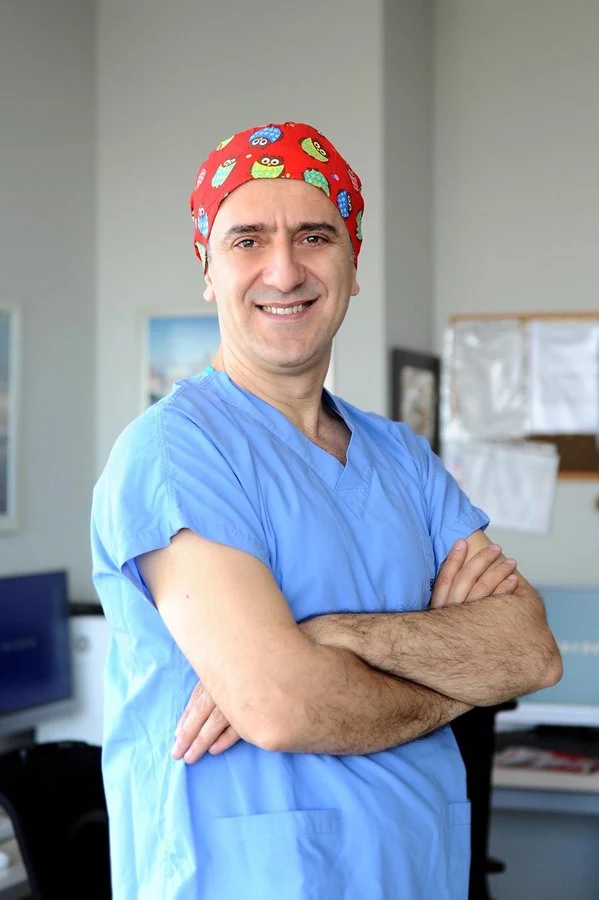
Independent doctor profile
Dr Muhammet Dilber
ENT and head-and-neck surgeon · Associate Professor
Istanbul, Türkiye
This doctor is not affiliated with Rhinoplasty Team Turkey. RTT publishes this information page; enquiries about this doctor must go directly to the official practice.
Independent doctor profile
Dr Muhammet Dilber
Muhammet Dilber is an ENT surgeon whose official clinic is in Ataköy, Bakırköy, Istanbul. His practice publishes information about primary rhinoplasty, revision surgery and nasal breathing concerns.
Sources checked:
Professional profile in context
From ENT training to a nasal-surgery practice in Istanbul
Dilber’s official biography places both his medical education and ENT specialist training at Bursa Uludağ University. It also describes earlier clinical work at Safa Hospital and Etiler Entrium. These are career-history details, distinct from his present practice address in Ataköy, Bakırköy. The public biography used here does not give graduation years, so the profile does not supply inferred dates.
The official professional name is Muhammet Dilber. His biography displays a 2024 associate-professor certificate, with the title also corroborated by a Turkish ENT society notice. His practice information discusses primary and revision rhinoplasty together with septoplasty and septorhinoplasty. When enquiring, distinguish an appointment at the clinic from the hospital proposed for surgery and ask for the complete treatment and follow-up arrangements.
What the research explores
The two selected publications cover notably different areas. The 2024 article is a narrative review of non-surgical rhinoplasty; it is not evidence of surgical rhinoplasty outcomes. The 2007 paper concerns shoulder morbidity following neck dissection, reflecting a head-and-neck topic. Both provide bibliographic context for authorship without establishing a ranking or a result for a future patient.
Source coverage: Official Turkish and English biographies; Turkish ENT society notice; official procedure and contact pages; selected PubMed records below.
01
Education and professional background
- Education
Bursa Uludağ University
His official biography records medical education and ENT specialty training at Bursa Uludağ University. Completion dates are not supplied in the biography used for this profile.
Source: Muhammet Dilber — official biography - Earlier career
Istanbul clinical background
His official Turkish biography describes earlier work at Safa Hospital and Etiler Entrium ENT Center. These are historical career details and do not confirm current operating arrangements or privileges.
Source: Muhammet Dilber — Turkish biography - Academic title
Associate Professor
The official biography reproduces an associate-professorship certificate dated 23 February 2024. The Turkish ENT society also announces his associate professorship. This is source attribution, not a live registration check.
Source: Muhammet Dilber — official biographySource: Türk KBB — Yeni Doçentimiz - Clinic
Ataköy, Bakırköy
The official contact page lists a clinic in the Yalı Ataköy office complex. Confirm the consultation address and proposed operating hospital directly; a clinic address does not establish hospital privileges.
Source: Muhammet Dilber — official clinic contact
02
What does the practice focus on?
Rhinoplasty and revision enquiries
The clinic describes primary rhinoplasty and has a separate revision-rhinoplasty page. Ask how previous treatment would affect an assessment and which records to bring. This listing does not confirm suitability or availability.
Septal and breathing concerns
The clinic also publishes information about septoplasty and combined septorhinoplasty. Ask whether the proposed procedure addresses internal obstruction, external shape or both, and request an individual explanation of risks, alternatives and follow-up.
Reading the research
The selected 2024 paper is a narrative review of non-surgical rhinoplasty, not a surgical-outcomes study. The earlier 2007 paper concerns shoulder symptoms following neck dissection. Both document authorship rather than an individual result.
Understanding nasal surgery
Different goals. One carefully considered plan.
A useful consultation separates what you would like to change from what an examination can establish. The guide below explains the vocabulary used in nasal surgery. It is general education, not a description of this doctor’s personal technique or a recommendation for your case.
Form
What would you like to change about your nose within the proportions of your face?
Breathing
Which symptoms need an internal examination and discussion of possible causes?
History
How do previous treatment, health and expectations inform the discussion?
Conceptual planning diagram, not a diagnostic image or a prediction of surgical results.
Rhinoplasty: the external shape
Rhinoplasty changes the shape or size of the nose. Open and closed describe access through different incision patterns; these words alone do not tell you what structural work is planned. Ask your surgeon to explain the proposed changes, their limitations and why that access suits your anatomy.
NHS · Nose reshaping (rhinoplasty)
Septoplasty: the internal partition
The septum divides the two nasal passages. A deviation can contribute to obstruction, but an off-centre septum does not always cause symptoms. Assessment considers other contributors, including the turbinates and nasal valves. Septoplasty addresses the septum; a combined septorhinoplasty also addresses the external nose.
AAO-HNSF / ENT Health · Deviated Septum
Revision: understand the earlier operation
If you have already had surgery, make that clear at the outset and bring any available operative records. A useful consultation should distinguish the concern you see today from the correction being proposed. Ask what can realistically change, what may remain and whether further surgery is appropriate at all.
ASPS · Rhinoplasty consultation; editorial consultation prompts
Arrive with a history, leave with clear questions.
Prepare your medical conditions, allergies, current medicines and supplements, smoking or alcohol history and previous procedures. Describe both appearance and breathing concerns. The consultation should include examination, available options and an explanation of risks. Do not change prescribed medicines yourself; ask the treating team for individual instructions.
ASPS · Rhinoplasty consultation
Recovery is a sequence, not a reveal.
This visual is an orientation to follow-up, not a fixed timetable. The treating surgeon determines your care and review schedule.
- 01
Initial care
Splints or dressings may protect the nose. Obtain written instructions on care, medicines and the next review.
- 02
Early review
Ask who removes dressings or sutures, when you can resume activities and whom to contact with concerns.
- 03
Ongoing healing
Swelling changes over time; refinement can take up to a year. An early photograph is not the final assessment.
- 04
Continued follow-up
Confirm how reviews continue after you return home and how persistent concerns will be assessed.
ASPS · Rhinoplasty recovery
Discuss the trade-offs before deciding.
Possible risks include breathing difficulty, infection, altered sensation, scarring, septal perforation, dissatisfaction with appearance and further surgery. Anaesthesia has its own risks. Ask which are relevant to your health and proposed operation, how complications would be managed and what alternatives are available.
ASPS · Rhinoplasty risks and safety
03
Selected published research
These bibliographic records document research interests. They do not establish superiority or predict an individual outcome.
- 01
A narrative-style review of non-surgical rhinoplasty: Indications, outcomes, and limitations
Journal of Cranio-Maxillofacial Surgery. 2024;52(9):1012–1018.
PMID: 38876955
- 02
The relationship between shoulder pain and damage to the cervical plexus following neck dissection
European Archives of Oto-Rhino-Laryngology. 2007;264(11):1333–1338.
PMID: 17554547
04
Questions before contacting the practice
Where is the doctor based?
Istanbul, Türkiye
What is the doctor’s specialty?
ENT and head-and-neck surgeon · Associate Professor
Is his name Muhammed or Muhammet Dilber?
His official professional name is Muhammet Dilber. That spelling appears in his Turkish professional profile and the research records listed here.
Can I book this doctor through RTT?
No. This is an independent information page. Use the doctor’s official contact page for consultations, fees, the proposed hospital and follow-up arrangements.
05
Sources and verification
Professional facts are attributed to the sources below. Practice websites describe their own services; they are not independent evidence of outcomes. Confirm current arrangements directly.
Muhammet Dilber — official biography
Sources checked:
Türk KBB — Yeni Doçentimiz
Sources checked:
Muhammet Dilber — rhinoplasty
Sources checked:
Muhammet Dilber — revision rhinoplasty
Sources checked:
Muhammet Dilber — official clinic contact
Sources checked:
Muhammet Dilber — Turkish professional profile
Sources checked:
Muhammet Dilber — Turkish biography
Sources checked:
Muhammet Dilber — septoplasty information
Sources checked:
Related articles about this doctor
Planning & research
Researching Muhammet Dilber for Rhinoplasty? A Patient Comparison Guide
The official website presents an Istanbul ENT/head-and-neck surgery practice focused on rhinoplasty; patients should verify current credentials, facility and suitability directly.