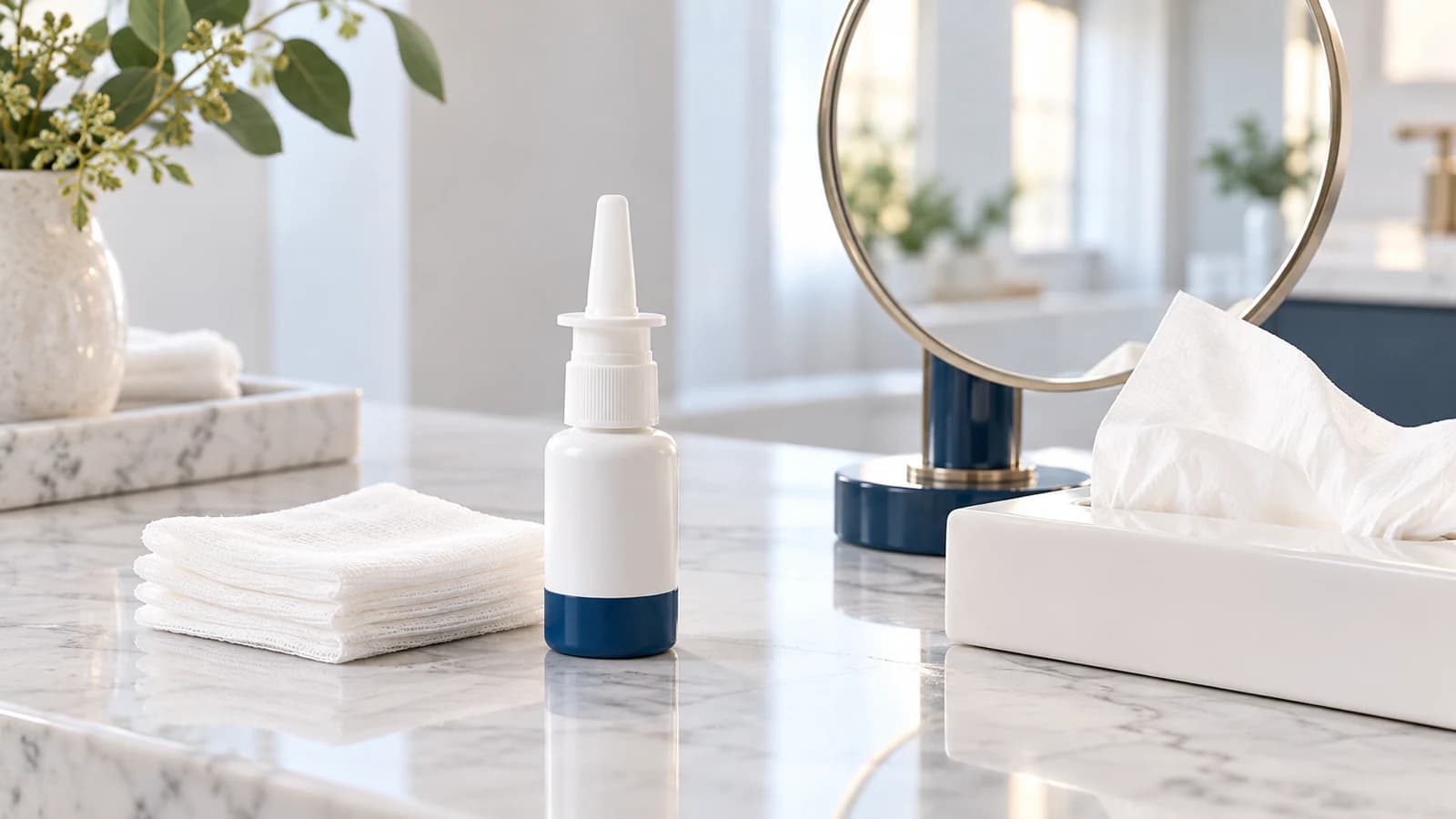
The first time you notice dried blood around your nostrils after rhinoplasty, it can be tempting to reach for a cotton bud and clear everything away. A healing nose needs a gentler approach.
Clean only the areas your surgical team has shown you, using the products and method in your written aftercare plan. Gently dab drainage on the outside if permitted. Do not pick crusts, probe inside your nostrils or remove packing and splints. Use saline spray or a rinse only when your team has told you which one to use and when to start.
This guide explains those distinctions so you can follow your own instructions more confidently. It is general education, not a replacement for the plan given by your treating surgeon.
Why does the nose feel blocked or crusty after surgery?
Swelling, mucus and dried blood can all contribute to a blocked feeling. Internal packing or splints may also affect airflow. That sensation does not necessarily mean your nose needs more cleaning.
Trying to remove every visible crust can disturb healing tissue. A familiar blocked feeling and a new, increasingly painful blockage are also different situations. Tell your clinical team about a change that is getting worse rather than trying to solve it with stronger rinsing.
For the broader pattern of early recovery, read our day-by-day recovery guide.
What is the difference between outside wiping and inside cleaning?
Outside the nose: this may involve gently dabbing drainage that has reached the nostril edge or the skin beneath it. External stitches, dressings and the bridge of the nose need their own instructions.
Inside the nose: saline spray, irrigation and any prescribed ointment are separate treatments. Permission to wipe the outside does not mean you should clean deeper inside. Permission to use a spray does not mean you should switch to a squeeze bottle.
Before leaving the hospital or clinic, ask a nurse or your surgeon to demonstrate the care intended for you. A short demonstration is often clearer than a product name on a discharge sheet.
How can I approach cleaning gently, step by step?
1. Check exactly what your plan allows
Have your written instructions beside you. Confirm the product, area to clean, start date and frequency. If the plan mentions “saline,” check whether that means a fine mist or an irrigation device.
If you have not been told to clean inside the nose, do not start an internal routine from a video or another patient's recommendation. Ask the treating team first.
2. Prepare clean hands and the right supplies
Wash and dry your hands before handling the supplies. Set out only what your team has recommended. If a device is part of the plan, check its cleaning and preparation instructions before use.
There is no need to assemble a large collection of products “just in case.” Knowing what each supplied item is for makes the routine easier to follow and reduces the temptation to improvise.
3. Dab external drainage without rubbing
If your instructions allow it, use a clean tissue or the gauze supplied by your team to gently dab fluid that has reached the outside. Keep the action light; do not rub the nose, scrape dried blood or push material into a nostril.
Do not assume the same method is suitable for an incision. If there are stitches beneath or beside your nose, follow the separate wound-care instructions for that area.
4. Use prescribed saline in the instructed way
Some teams include saline in aftercare to help manage dryness and accumulated secretions. The exact product and delivery method matter.
Use the technique demonstrated for your operation. Do not increase the pressure, quantity or frequency because the nose still feels blocked. If the instructions are unclear, ask before continuing rather than changing the method yourself.
5. Leave attached crusts and devices alone
Do not pick or peel a crust that remains attached. Avoid fingernails, tweezers and cotton buds inside the nose. A piece of material you can see may be a stitch or part of a dressing, not something that needs removing.
Keep the external cast or splint dry as instructed. Do not lift it to clean underneath, reposition it or pull on internal supports. Ask the team what to do if a dressing loosens or a device seems displaced.
6. Finish with equipment care and a symptom check
If you use a prescribed reusable irrigation device, clean it and allow it to dry according to its instructions. Keep your written care plan available for the next use.
Notice how the nose feels afterwards. New pain, bleeding or worsening symptoms are reasons to stop trying to clear the nose and contact the clinical team. Repeatedly doing more is not the answer to an uncertain symptom.
How does saline spray differ from nasal irrigation?
Saline spray delivers a fine mist and may be included to moisten the nasal lining. It needs its own start time and use instructions.
Nasal irrigation or rinsing passes a larger volume of saline through the nasal passages. It may be prescribed to help wash out secretions and debris. It needs explicit postoperative permission and instruction in the correct technique.
Neither method is automatically right for every rhinoplasty. Instructions for sinus surgery or septoplasty should not be treated as a substitute for your own plan.
If you have been prescribed irrigation, water safety matters. Use the prepared solution recommended by your team, or prepare the instructed saline mixture with distilled, sterile or properly boiled and cooled water. Untreated tap water is not suitable for nasal rinsing. A bottle labelled simply “drinking water” is not necessarily sterile. Do not improvise the salt mixture or add other substances.
What about dried blood, stitches and cotton buds?
A small amount of dried blood can look more alarming than it is. Its appearance alone cannot tell you whether it should be removed.
If it is attached, uncomfortable or obstructing an area you cannot safely manage, ask your surgical team to assess it. Do not pull it away to make the nose look cleaner. If a clinician has given you a specific method for an external incision, use that method only on the demonstrated area; it is not permission to explore inside the nostril.
Do not introduce peroxide, alcohol, antiseptics, creams or medicated sprays on your own. Products used in one hospital's instructions may not belong in another patient's care plan.
When can I blow my nose or wash my face normally?
Do not blow your nose until your treating team says you may. Published recovery instructions give different time periods, so a day number from the internet is not personal clearance. If you need to sneeze, keep your mouth open rather than trying to force the sneeze through your nose.
Washing the surrounding face is a separate question from wetting the cast, cleansing an incision or rubbing the nose. Ask how to keep dressings dry and when normal skin care can restart. Splint removal does not automatically mean every restriction has ended.
When should I contact the surgeon?
Get emergency help for severe breathing difficulty or heavy, uncontrolled bleeding. Do not wait for a WhatsApp reply or a routine appointment.
Contact the treating clinical team promptly for fever, increasing nasal pain, growing redness or swelling, worsening obstruction, or concerning discharge, especially if it smells unpleasant. New visual changes, swelling around an eye, or continuous clear watery leakage also need urgent medical assessment.
These signs do not establish a diagnosis. They are reasons to be examined. If the team is unavailable or the situation is urgent, seek local medical care wherever you are.
Our rhinoplasty risks guide explains the broader safety discussion.

What should I ask at my next review?
- Which parts of my nose may I clean myself?
- Is my product a saline spray, an irrigation rinse or a medicated treatment?
- Does having splints or packing change the instructions?
- What should I do about a crust that does not loosen?
- When may I blow my nose, wet the nose and return to usual skin care?
- Who should I contact after hours or after travelling home?
Keep that updated plan with your discharge information. A follow-up appointment is also a chance to have the technique checked, not simply to ask whether the nose looks better.
Frequently asked questions
How often should I clean my nose after rhinoplasty?
Follow the frequency written for your own operation. There is no single schedule that applies to outside wiping, incision care, saline spray and irrigation. Ask for clarification if “clean regularly” is the only instruction you have.
Can I clean my nose while internal splints are still in place?
Some care plans include a specific spray or cleaning method while supports remain in place. Others differ. Confirm your instructions; do not remove or move the splints to improve access.
Will saline immediately unblock my nose?
Not necessarily. Swelling and internal supports can contribute to blockage, so removing secretions may not make breathing feel clear. Persistent or worsening symptoms need clinical advice rather than more forceful cleaning.
Should I copy a cleaning routine from another patient?
No. Their operation, dressings and surgeon's instructions may be different. Use online information to prepare questions, not to replace your own care plan.
What should I remember about cleaning?
Keep the routine simple and specific to your operation: know what you may clean, use only the instructed method, leave crusts and supports alone, and ask for help when symptoms change. The aim is careful care during healing, not a perfectly clear-looking nose at every moment.
For wider recovery planning, visit our rhinoplasty recovery guide.
Sources and scope
Sources checked: 29 October 2026. Background information: American Society of Plastic Surgeons; NHS; Cambridge University Hospitals; Stanford Medicine; Gloucestershire Hospitals; US Food and Drug Administration; US Centers for Disease Control and Prevention; Princess Alexandra Hospital NHS Trust; Cleveland Clinic.
This article combines general patient education and device-safety information. It does not establish a Rhinoplasty Team Turkey postoperative protocol, diagnose a symptom or replace the instructions of your treating clinician.
Rhinoplasty Team Turkey
Continue your research
Rhinoplasty Team Turkey