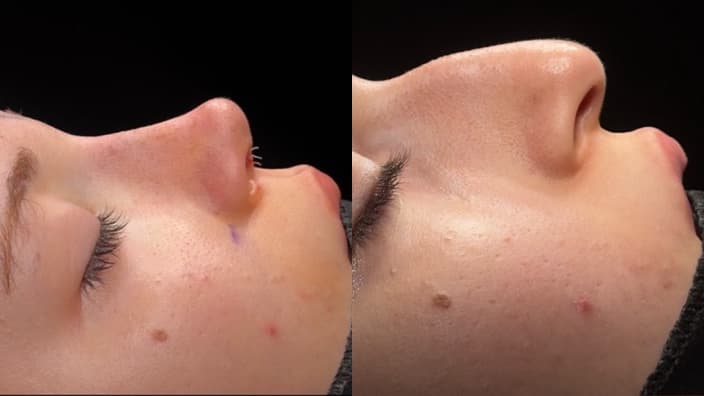
Rib cartilage is not necessary for every rhinoplasty. It may be recommended when the planned reconstruction needs more cartilage, or stronger and longer pieces, than can safely be obtained from the nasal septum or ear. The reason should be a specific structural need identified by the surgeon—not simply that rib cartilage is available or that another patient had it.
“Necessary” also depends on the proposed operation. A substantial reconstruction and a limited contour adjustment may require very different resources. This guide explains the discussion; it cannot establish whether you need a graft from a photograph or a list of symptoms.
What rib cartilage adds to the surgical plan
Costal cartilage is the firm, flexible tissue associated with the ribs. In rhinoplasty, a portion can be shaped into grafts to rebuild or reinforce the nasal framework. The aim may involve shape, support, the airway or a combination. A graft is a building material within a wider operation, not a separate guarantee of a particular nose.
Rib cartilage offers a relatively generous supply when several grafts or substantial support are required. Its firmness can be useful, but is not automatically an advantage for every location. The surgeon must match the material, dimensions and placement to the job and the tissues covering it.
When might a surgeon consider it?
Too little usable septal cartilage
The septum—the partition between the nasal passages—is a common source of graft cartilage. Only a suitable amount can be taken while preserving necessary nasal support. A limited supply, damaged tissue or a requirement for several structural grafts may make the available septal cartilage insufficient. “There is cartilage in the nose” does not necessarily mean there is enough that can safely be used.
Previous nasal surgery
A previous septoplasty or rhinoplasty may have removed or reshaped cartilage. Scar tissue and altered support can make reconstruction more complex. Rib cartilage may be discussed when the remaining tissue cannot meet the new plan, but a revision does not automatically require a rib graft. Bring previous operation reports and any information about existing grafts. The revision rhinoplasty guide explains the broader assessment.
A substantial reconstruction or support requirement
Selected cases involving a markedly weakened framework, loss of bridge support, significant trauma or a congenital structural difference may need a larger reconstruction. A surgeon may also consider rib cartilage when the plan calls for substantial bridge augmentation or rebuilding support for the tip and septum. These are possible clinical contexts, not a checklist for choosing treatment yourself.
A breathing complaint alone does not identify the necessary material. The examination must establish which structures are contributing and whether reconstruction would help. Our functional nasal surgery guide separates different causes and treatment goals.
Why not use the septum or ear instead?
Septal cartilage can provide useful, relatively straight grafts within the nasal operative area when adequate tissue remains. Its supply and the need to preserve support limit what can be taken.
Ear cartilage is another option. Its curved shape and flexibility can suit selected contour or support tasks, but may not supply the length, quantity or rigidity needed for a major reconstruction. Harvesting also introduces an ear wound and its own risks. It is not simply a smaller version of a rib graft.
Rib cartilage may meet a larger structural requirement, at the cost of different handling challenges and, when harvested from your own chest, another surgical site. These options are not a ranking from inferior to superior. Ask what each alternative could achieve in your case, including whether a more limited plan or no further operation is reasonable.
Your own rib cartilage and donor cartilage are different options
An autologous graft comes from your own body. Harvesting rib cartilage requires a chest incision and a separate healing area. An allograft, also called donor or homologous cartilage, comes from another human donor and is processed by a tissue bank. It avoids harvesting from your chest, but does not remove nasal surgical or graft-related risks.
Donor cartilage products are not all interchangeable: processing methods, including irradiation or fresh freezing, differ. A published case series of fresh-frozen cartilage and a small prospective, non-randomised comparison provide useful evidence, but do not establish one material as the best choice for every person or every graft position. Ask about the exact material, its source and processing, evidence relevant to the proposed use, and its availability in the treating facility. This article does not state that any particular option is routinely offered through Rhinoplasty Team Turkey.
Risks to discuss before deciding
At the nose, possible problems include warping (a graft bending or changing shape), resorption (loss of graft volume), infection, movement or visible or palpable edges. Persistent asymmetry, breathing problems or a result that does not meet expectations may lead to further treatment. Neither your own tissue nor donor cartilage makes these risks disappear.
With your own rib cartilage, the chest site can have pain, tenderness, a scar, altered sensation or wound problems. Rare chest complications include injury to the lining around the lung and pneumothorax, where air collects around the lung. A scar may remain noticeable; “hidden” does not mean absent. Discuss personal scar history and health factors with the surgeon.
Published studies describe particular patients, techniques and follow-up periods. Their complication figures cannot be turned into a personal forecast or a clinic's success rate. Your consent discussion should cover both the nasal operation and any harvest site, as well as the limits of the expected improvement.
Recovery involves more than the appearance of the nose
Early nasal swelling and congestion can improve before the final contour settles. ASPS guidance describes refinement continuing for up to a year; individual recovery, particularly after complex surgery, can differ. The recovery guide distinguishes early milestones from a settled result.
If cartilage is taken from your chest, comfort with movement, lifting and exercise must be considered alongside nasal healing. Studies of donor-site discomfort show variation, so neither severe pain nor a painless recovery should be promised. Ask for individual instructions on wound care, pain control, work, sport, travel and follow-up. A booked return flight is not medical clearance.
Obtain clear instructions about whom to contact for increasing pain, redness, discharge or fever. New chest pain or shortness of breath after surgery needs urgent medical assessment rather than waiting for a routine online review.
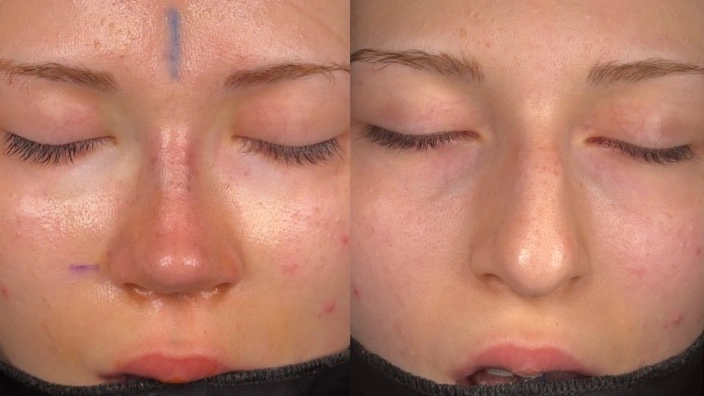
What the photographs can—and cannot—show
The supplied images show external views of a nose. The photographs alone do not establish whether rib cartilage was used, which other procedures were performed, when they were taken or how breathing changed. They are not evidence that you need the same operation or a prediction of your result.
Questions for an individual consultation
- Which structural finding makes additional cartilage relevant to my plan?
- How much usable septal cartilage is likely to remain, and what is still uncertain?
- Why would ear cartilage, a different graft or a smaller operation be insufficient?
- Is the proposed graft my own tissue or donor tissue, and what are its specific tradeoffs?
- Could findings during surgery change the plan, and how will alternatives be agreed beforehand?
- Who will review the nose and any harvest site, including after I return home?
Rhinoplasty Team Turkey is an information website, not a healthcare facility, and does not perform medical procedures. Medical assessment, surgery and clinical aftercare are provided by the relevant physician and healthcare facility. Use the contact page for appointment and practical questions; the treating surgeon must explain and agree the clinical plan with you.
Sources used
ASPS, Rhinoplasty Procedure Steps and Recovery; Moon and colleagues, Outcomes following rhinoplasty using autologous costal cartilage (2012); Ho and colleagues, Cartilage Graft Donor Site Morbidity following Rhinoplasty and Nasal Reconstruction (2018); Hanna and colleagues, Outcomes of the Use of Fresh-Frozen Costal Cartilage in Rhinoplasty (2024); Wan and colleagues, prospective controlled clinical trial, PSRC abstract (2023). Source check: 14 October 2026. This is general educational information, not an individual treatment recommendation.
Rhinoplasty Team Turkey
Continue your research
Rhinoplasty Team Turkey